Unless you try to do something beyond what you have already mastered, you will never grow.
 - Ronald E. Osborn
Make Some Light!


 It is pleasing to human vanity to believe that one suffers because of one’s virtue; but not until a man has extirpated every sickly, bitter, and impure thought from his mind, and washed every sinful stain from his soul, can he be in a position to know and declare that his sufferings are the result of his good, and not of his bad qualities; and on the way to, yet long before he has reached, that supreme perfection, he will have found, working in his mind and life, the Great Law which is absolutely just, and which cannot, therefore, give good for evil, evil for good. Possessed of such knowledge, he will then know, looking back upon his past ignorance and blindness, that life is, and always was, justly ordered, and that all his past experiences, good and bad, were the equitable outworking of his evolving, yet unevolved self.
Make Some Light!

 Here is a rich man who is the victim of a painful and persistent disease as the result of gluttony. He is willing to give large sums of money to get rid of it, but he will not sacrifice his gluttonous desires. He wants to gratify his taste for rich and unnatural viands and have his health as well. Such a man is totally unfit to have health, because he has not yet learned the first principles of a healthy life.
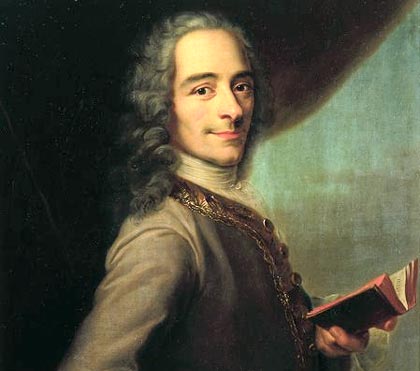
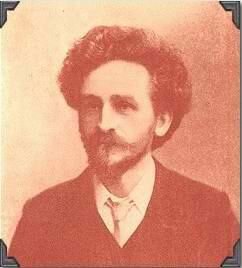
James Allen here continues with his characterization of man and illustrates how his own choices and propensities rightly determine the state of his life. By holding two competing intentions, health and gluttony, he fails to reach the goal he states that he desires-a healthy life. Choices made in the inner world manifest in the outer world, revealing true intentions beyond our stated intentions.
In what areas in your life have you expressed an intention to change, and yet fell short of your stated intention? What does this reveal to you about the intentions held in the inner world of your mind?
Make Some Light!
 Here is a man who is wretchedly poor. He is extremely anxious that his surroundings and home comforts should be improved, yet all the time he shirks his work, and considers he is justified in trying to deceive his employer on the ground of the insufficiency of his wages. Such a man does not understand the simplest rudiments of those principles which are the basis of true prosperity, and it is not only totally unfitted to rise out of his wretchedness, but is actually attracting to himself a still deeper wretchedness by dwelling in, and acting out, indolent, deceptive, and unmanly thoughts.
 Men are anxious to improve their circumstances, but are unwilling to improve themselves; they therefore remain bound. The man who does not shrink from self-crucifixion can never fail to accomplish the object upon which his heart is set. This is as true of earthly as of heavenly things. Even the man whose sole object is to acquire wealth must be prepared to make great personal sacrifices before he can accomplish his object; and how much more he who would realize a strong and well-poised life?
 Not what he wishes and prays for does a man get, but what he justly earns. His wishes and prayers are only gratified and answered when they harmonize with his thoughts and actions.
 Men do not attract that which they want, but that which they are. Their whims, fancies, and ambitions are thwarted at every step, but their inmost thoughts and desires are fed with their own food, be it foul or clean. The "divinity that shapes our ends" is in ourselves; it is our very self. Man is manacled only by himself: thought and action are the jailers of Fate - they imprison, being base; they are also the angels of Freedom - they liberate, being noble.
 A man does not come to the almshouse or the jail by the tyranny of fate or circumstance, but by the pathway of groveling thoughts and base desires. Nor does a pure-minded man fall suddenly into crime by stress of any mere external force; the criminal thought had long been secretly fostered in the heart, and the hour of opportunity revealed its gathering power. Circumstance does not make the man; it reveals him to himself. No such conditions can exist as descending into vice and its attendant sufferings apart from vicious inclinations; or ascending into virtue and its pure happiness without the continued cultivation of virtuous aspirations; and man, therefore, as the lord and master of thought, is the maker of himself, the shaper and author of environment. Even at birth the soul comes to its own, and through every step of its earthly pilgrimage it attracts those combinations of conditions which reveal itself, which are the reflections of its own purity and impurity, its strength and weakness.
 Following the inmost desires, aspirations, thoughts, by which he allows himself to be dominated (pursuing the will-o-the-wisps of impure imagining or steadfastly walking the highway of strong and high endeavor), a man at last arrives at their fruition and fulfillment in the outer condition of his life.
 The soul attracts that which it secretly harbors; that which it loves, and also that which it fears; it reaches the height of its cherished aspirations; it falls to the level of its unchastened desires; and circumstances are the means by which the soul receives its own.Every thought-seed sown or allowed to fall into the mind, and to take root there, produces its own, blossoming sooner or later into act, and bearing its own fruitage of opportunity and circumstances. Good thoughts bear good fruit, bad thoughts bad fruit.
 That circumstances grow out of thought every man knows who has for any length of time practiced self-control and self-purification, for he will have noticed that the alteration in his circumstances has been in exact ratio with his altered mental condition. So true is this that when a man earnestly applies himself to remedy the defects in his character, and makes swift and marked progress, he passes rapidly through a succession of vicissitudes.
 Man is buffeted by circumstances so long as he believes himself to be the creature of outside conditions, but when he realizes that he is a creative power, and that he may command the hidden soil and seeds of his being out of which circumstances grow, then he becomes the rightful master of himself.
 As a progressive and evolving being, man is where he is that he may learn that he may grow; and as he learns the spiritual lesson which any circumstance contains for him, it passes away and gives place to other circumstances.
 Thought and character are one, and as character can only manifest and discover itself through environment and circumstance, the outer conditions of a person’s life will always be found to be harmoniously related to his inner state. This does not mean that a man’s circumstances at any given time are an indication of his entire character, but that those circumstances are so intimately connected with some vital thought-element within himself that, for the time being, they are indispensable to his development.
 Just as a gardener cultivates his plot, keeping it free from weeds, and growing the flowers and fruits which he requires, so may a man tend the garden of his mind, weeding out all the wrong, useless, and impure thoughts, and cultivating toward perfection the flowers and fruits of right, useful, and pure thoughts. By pursuing this process, a man sooner or later discovers that he is the master-gardener of his soul, the director of his life. He also reveals, within himself, the laws of thought, and understands, with ever-increasing accuracy, how the thought-forces and mind-elements operate in the shaping of his character, circumstances, and destiny.
%20(2).JPG)
 Man is always the master, even in his weakest and most abandoned state; but in his weakness and degradation he is the foolish master who misgoverns his household. When he begins to reflect upon his condition, and to search diligently for the Law upon which his being is established, he then becomes the wise master, directing his energies with intelligence, and fashioning his thoughts to fruitful issues. Such is the conscious master, and man can only thus become by discovering within himself the laws of thought; which discovery is totally a matter of application, self-analysis, and experience.
 Of all the beautiful truths pertaining to the soul which have been restored and brought to light in this age, none is more gladdening or fruitful of divine promise and confidence than this-that man is the master of thought, the molder of character, and the maker and shaper of condition, environment, and destiny.
 Man is a growth by law, and not a creation by artifice, and cause and effect is as absolute and undeviating in the hidden realm of thought as in the world of visible and material things. A noble and Godlike character is not a thing of favor or chance, but is the natural result of continued effort in right thinking, the effect of long-cherished association with Godlike thoughts. An ignoble character, by the same process, is the result of the continued harboring of groveling thoughts.

 Live your life each day as you would climb a mountain. An occasional glance towards the summit keeps the goal in mind, but many beautiful scenes are to be observed from each new vantage point.
Climb slowly, steadily, enjoying each passing moment; and the view from the summit will serve as a fitting climax for the journey.
-Harold V. Melchert
| | |
|